

Kris Kristofferson is a name that resonates deeply in the realms of music, acting, and even poetry. He stands as a singular figure in American culture, transcending the boundaries of genre and medium with his remarkable talents. Kristofferson’s life reads like a novel, filled with experiences and achievements that have made him a living legend. -Jun 22, 1936 – Sep 28, 2024
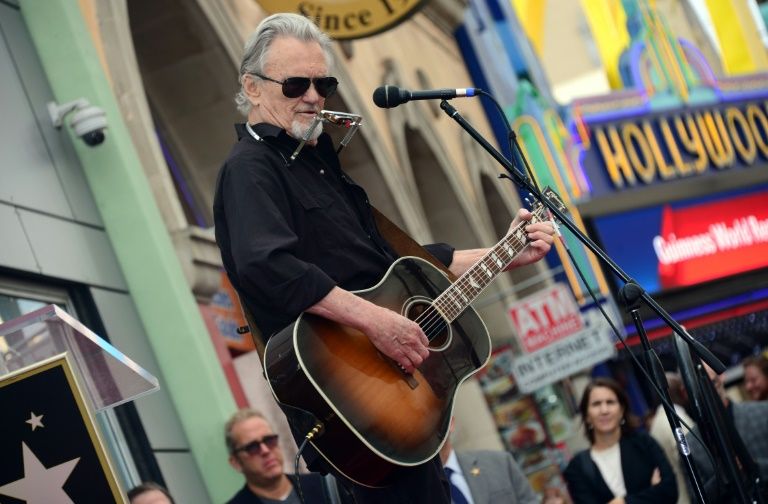
From his early days as a songwriter in Nashville to his flourishing film career, and even his political activism, Kristofferson has managed to remain relevant and revered for more than five decades. This article will delve deeply into the many facets of his life—his music, his film career, his personal struggles, and his lasting impact on American culture.

Early Life and Education
Kristoffer Kristofferson was born on June 22, 1936, in Brownsville, Texas. His father was a U.S. Army Air Corps officer, which set the stage for a disciplined and structured upbringing. Growing up in a military family meant that Kris was no stranger to moving around; his early years were spent in various military bases across the United States. As a result, his early life was shaped by the rigors of military discipline, but it also gave him a sense of adventure and curiosity that would later inform his artistic pursuits.
Kristofferson’s academic career was just as illustrious as his later artistic one. He graduated from Pomona College in 1958 with a degree in literature, earning a Rhodes Scholarship to Oxford University in England. While at Oxford, he studied English literature and dabbled in songwriting. Despite the pull toward music, he initially followed the more conventional path laid out by his family, joining the U.S. Army and rising to the rank of captain. He even became a helicopter pilot, which would later play a significant role in his journey to Nashville.
The Nashville Dream: Songwriting Success
Despite a promising military career, Kristofferson’s heart was never truly in it. His passion for music ultimately won out, and he made the difficult decision to leave the Army in the early 1960s. This decision led him to Nashville, where he would struggle for years before finally breaking through as a songwriter. Nashville in the 1960s was a mecca for country music, but it was also a difficult place for newcomers to make their mark. Kristofferson took odd jobs, including as a janitor at Columbia Studios, to support his growing family while trying to get his foot in the door of the music industry.

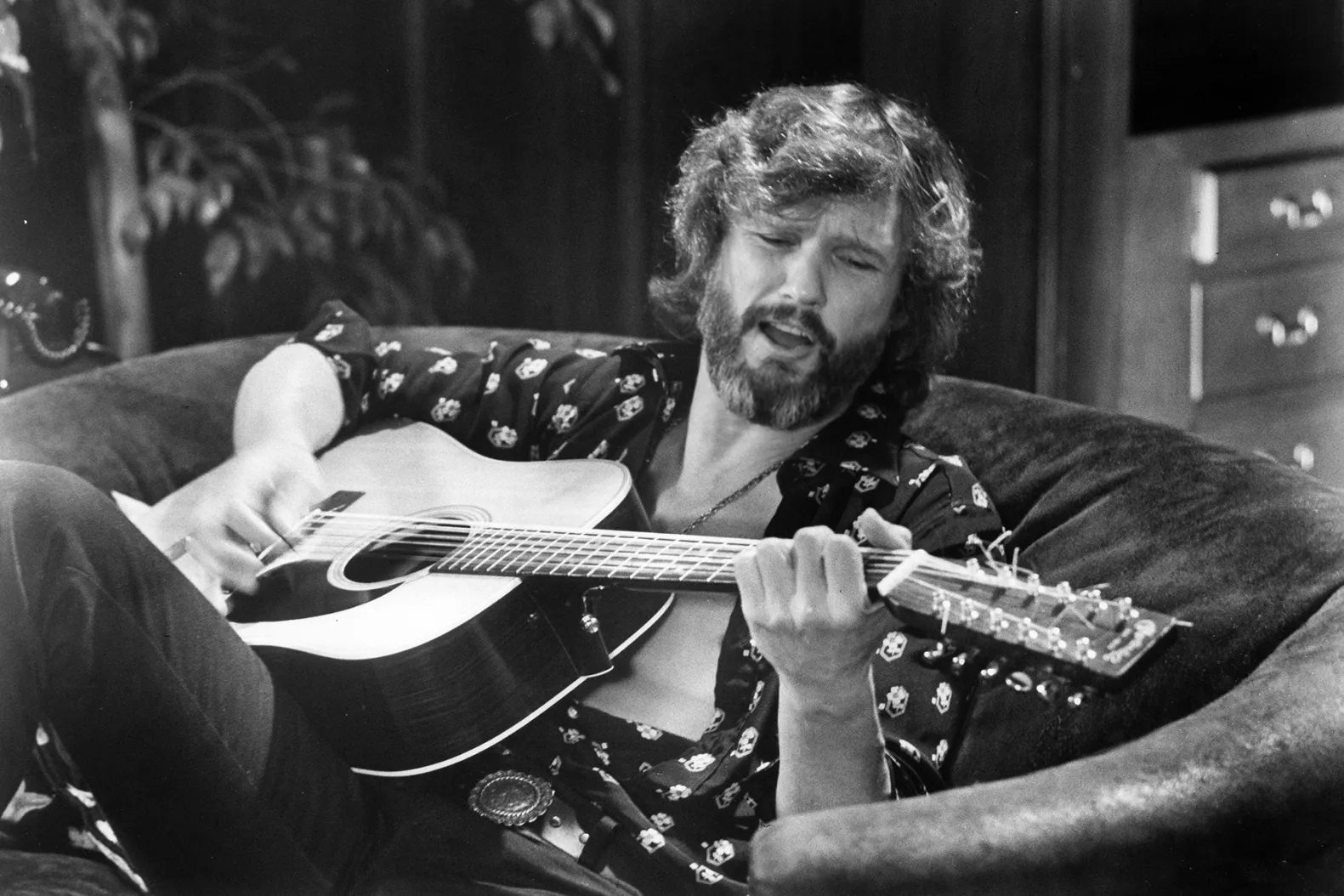
His breakthrough came in the late 1960s when a series of his songs became hits for other artists. Roger Miller recorded “Me and Bobby McGee,” one of Kristofferson’s most iconic songs, in 1969. The song later became a massive hit for Janis Joplin in 1971, reaching the top of the charts posthumously after her tragic death. Other country stars, including Johnny Cash, Willie Nelson, and Waylon Jennings, also started recording his songs, turning Kristofferson into one of the most sought-after songwriters in Nashville.
Perhaps the most iconic moment in Kristofferson’s early career came when he famously landed a helicopter on Johnny Cash’s property to deliver a demo tape. Cash, initially annoyed, was impressed by Kristofferson’s boldness and later became one of his closest collaborators. Their partnership helped to elevate Kristofferson’s stature in the music world, cementing his status as a rising star in the country music scene.


The Outlaw Movement: Redefining Country Music
Kris Kristofferson was a key figure in what became known as the “Outlaw Country” movement in the 1970s. This subgenre of country music rejected the highly polished, commercially driven sound that was dominating Nashville at the time. Outlaw country was raw, gritty, and rebellious, with lyrics that often dealt with themes of personal freedom, rebellion, and existential angst. Kristofferson, along with Willie Nelson, Johnny Cash, and Waylon Jennings, became one of the most prominent faces of this movement.
What set Kristofferson apart was his lyrical depth. Unlike many country songs that focused on traditional themes like love, heartbreak, and rural life, Kristofferson’s songs often tackled more complex emotional and philosophical issues. Songs like “Sunday Mornin’ Comin’ Down” and “Help Me Make It Through the Night” explored the darker sides of life—loneliness, regret, and existential longing. His unique voice in country music earned him critical acclaim, with many considering him a poet as much as a songwriter.
The 1970s were a golden period for Kristofferson. His albums, including Kristofferson (1970) and Jesus Was a Capricorn (1972), became critical and commercial successes. He won multiple Grammy Awards during this period and even earned the respect of artists outside of the country genre, such as Bob Dylan and Joni Mitchell.
Hollywood Beckons: A Film Career Begins
Kristofferson’s good looks and undeniable charisma did not go unnoticed in Hollywood. In the early 1970s, he transitioned from being a music star to a full-fledged movie star. His film debut came in 1971 with The Last Movie, directed by Dennis Hopper. However, it was his role in Pat Garrett & Billy the Kid (1973), directed by Sam Peckinpah, that truly established him as a serious actor. In this film, Kristofferson played the iconic outlaw Billy the Kid opposite James Coburn’s Pat Garrett. The movie became a cult classic, and Kristofferson’s portrayal of Billy the Kid is still regarded as one of the best interpretations of the character.
Kristofferson’s acting career continued to flourish throughout the 1970s and 1980s. He starred in a series of critically acclaimed films, including Alice Doesn’t Live Here Anymore (1974), Convoy (1978), and the remake of A Star is Born (1976), where he co-starred with Barbra Streisand. The latter film, in which Kristofferson played a troubled rock star, earned him a Golden Globe Award for Best Actor.
Despite his success in Hollywood, Kristofferson never fully abandoned his music career. In fact, many of his roles in film allowed him to combine his love of music and acting. In A Star is Born, for example, Kristofferson performed several songs, further showcasing his multifaceted talent.
Personal Struggles: Love, Addiction, and Redemption
Behind the scenes of his successful career, Kristofferson was battling personal demons. Like many artists of his era, he struggled with alcohol and substance abuse, issues that were exacerbated by the pressures of fame. His relationships also suffered as a result, including his marriage to singer Rita Coolidge, with whom he had a daughter, Casey. The two divorced in 1980, and Kristofferson’s personal life seemed to mirror the turmoil often depicted in his songs and films.
However, like many of the characters he portrayed on screen, Kristofferson was resilient. He eventually sought help for his addictions and began to rebuild his personal and professional life in the 1980s. His career took a new direction during this period, as he became increasingly involved in political activism. Kristofferson had always been a politically conscious artist, but during the 1980s and 1990s, he became more outspoken, particularly on issues related to human rights, environmentalism, and U.S. foreign policy in Latin America.
Kristofferson’s activism often put him at odds with the more conservative elements of the country music establishment, but he remained true to his principles. His involvement in causes such as the Sandinista movement in Nicaragua and his opposition to the U.S. government’s policies in Central America earned him both praise and criticism. However, his activism never detracted from his artistry; if anything, it added depth to his work, as his songs began to reflect his growing political awareness.
The Highwaymen: A Legendary Collaboration
One of the highlights of Kristofferson’s later career was his collaboration with Willie Nelson, Johnny Cash, and Waylon Jennings in the supergroup The Highwaymen. Formed in 1985, The Highwaymen brought together four of the most iconic voices in country music. Their self-titled debut album became a massive success, with the title track “Highwayman” becoming a hit and cementing the group’s place in country music history.
The Highwaymen represented a sort of reunion for Kristofferson, Cash, Nelson, and Jennings, who had all been key figures in the Outlaw Country movement. Their collaboration lasted for over a decade, and they released three albums together. The Highwaymen toured extensively, and their concerts became legendary events, drawing fans from across genres.
For Kristofferson, The Highwaymen marked a high point in his career, not just musically but also personally. By the mid-1980s, he had overcome many of the personal struggles that had plagued him in earlier years. His friendships with Cash, Nelson, and Jennings were strong, and their mutual respect and camaraderie were evident in their performances.
A New Chapter: Aging Gracefully in the 21st Century
As the 1990s gave way to the 2000s, Kris Kristofferson entered a new phase of his career. While many artists might have slowed down at his age, Kristofferson continued to make music and act in films. His later albums, such as This Old Road (2006) and Closer to the Bone (2009), were reflective and introspective, dealing with themes of aging, mortality, and the passage of time. These albums earned him critical acclaim, with many reviewers noting that his songwriting had only deepened with age.
In addition to his music, Kristofferson continued to act, taking on roles in films like Blade (1998) and Dolphin Tale (2011). His versatility as an actor was still evident, and he remained a sought-after character actor well into his 70s.
In 2016, Kristofferson revealed that he had been diagnosed with Lyme disease, a condition that had been misdiagnosed for several years as Alzheimer’s disease. Despite this health setback, Kristofferson remained active, continuing to perform and make public appearances.
Legacy: A True American Icon
Kris Kristofferson’s legacy is multifaceted, touching on music, film, and even political activism. As a songwriter, his impact on country music is immeasurable. Songs like “Me and Bobby McGee,” “Sunday Mornin’ Comin’ Down,” and “Help Me Make It Through the Night” are considered timeless classics, not just in country music but in the broader canon of American popular music.
As an actor, Kristofferson proved that musicians could successfully transition to Hollywood without losing their artistic integrity. His performances in films like Pat Garrett & Billy the Kid and A Star is Born showcased his range and versatility, making him a respected figure in both the music and film industries.
Perhaps most importantly, Kristofferson’s life and career have been marked by a sense of authenticity and integrity. Whether writing songs about heartbreak, playing outlaws on screen, or standing up for social justice causes, Kristofferson has always remained true to himself. He has never been afraid to take risks, whether it meant leaving behind a promising military career for the uncertainty of a life in music or speaking out on controversial political issues.
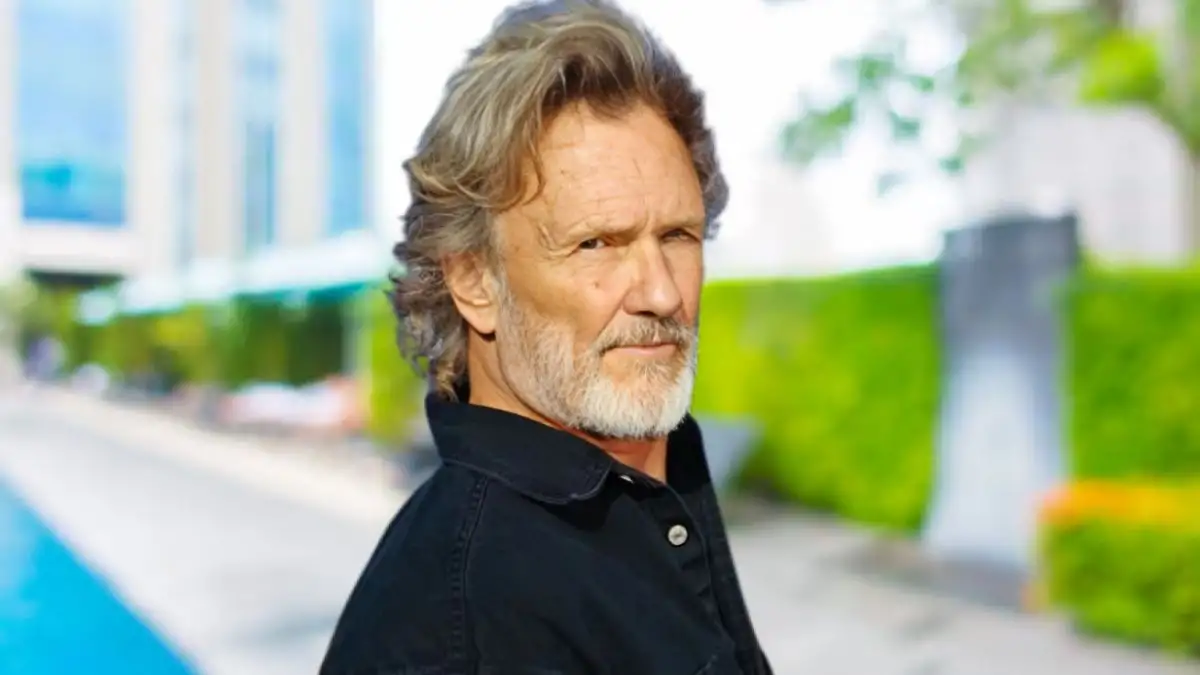
In many ways, Kris Kristofferson is the quintessential American artist—restless, rebellious, and constantly evolving. His influence can be seen in generations of musicians and actors who have followed in his footsteps, and his work will undoubtedly continue to resonate with audiences for years to come.
Kris Kristofferson is known for writing some of the most iconic and influential songs in country music history. His songwriting talent, characterized by emotional depth, raw honesty, and poetic lyricism, has influenced countless artists across genres. Here is a list of Kris Kristofferson’s best songs, including both his own recordings and songs made famous by other artists.
Kris Kristofferson’s Best Songs
1. “Me and Bobby McGee”
- Album: Kristofferson (1970)
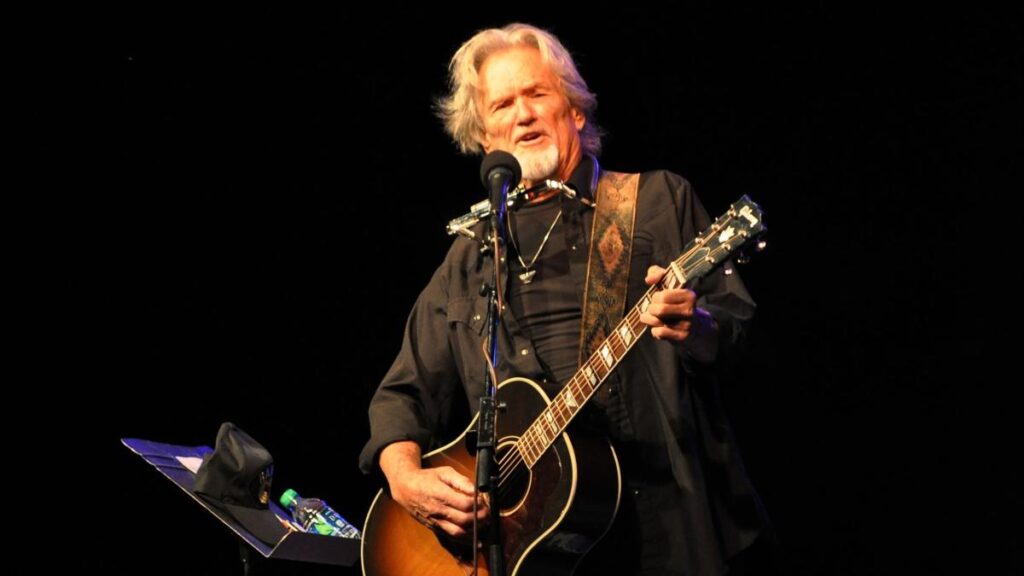
- Arguably Kristofferson’s most famous song, “Me and Bobby McGee” became an instant classic when Janis Joplin’s version topped the charts in 1971. The song is a bittersweet ode to lost love, freedom, and wandering, with lines like “Freedom’s just another word for nothing left to lose” cementing its place in American music history. Kristofferson’s own version is more subdued, but it’s equally powerful.
2. “Sunday Mornin’ Comin’ Down”
- Album: Kristofferson (1970)
- A haunting song about loneliness, regret, and existential angst, “Sunday Mornin’ Comin’ Down” became a hit when Johnny Cash recorded it in 1970. It captures the melancholy of waking up after a night of heavy drinking, faced with the emptiness of a Sunday morning. Cash’s version won the Country Music Association’s Song of the Year award, but Kristofferson’s own version is deeply personal and poignant.
3. “Help Me Make It Through the Night”
- Album: Kristofferson (1970)
- This tender ballad became a major hit when recorded by Sammi Smith in 1970. It’s a simple yet emotionally charged plea for comfort and companionship in a moment of vulnerability. Kristofferson’s lyrics speak to the human need for connection, even if it’s just for a single night. His own rendition is raw and intimate, contrasting with Smith’s more polished version.
4. “For the Good Times”
- Album: Kristofferson (1970)
- A mournful reflection on the end of a relationship, “For the Good Times” was made famous by Ray Price, whose version became a No. 1 country hit in 1970. The song expresses a quiet resignation, asking to remember the good times even as the relationship fades. Kristofferson’s version is similarly understated, allowing the lyrics to carry the emotional weight.
5. “Loving Her Was Easier (Than Anything I’ll Ever Do Again)”
- Album: The Silver Tongued Devil and I (1971)
- One of Kristofferson’s most beautiful love songs, “Loving Her Was Easier” is a tribute to a fleeting yet passionate romance. It captures the sense of euphoria that comes with falling in love and the bittersweet knowledge that such feelings may never come again. The song’s gentle melody and poetic lyrics make it a standout in his catalog.
6. “Why Me”
- Album: Jesus Was a Capricorn (1972)
- “Why Me” is a gospel-influenced song that reflects Kristofferson’s own experiences with spirituality and redemption. It became his biggest hit as a performer, reaching No. 1 on the country charts in 1973. The song expresses a deep sense of gratitude and humility, with Kristofferson questioning why he’s been given grace and forgiveness.
7. “The Pilgrim, Chapter 33”
- Album: The Silver Tongued Devil and I (1971)
- Kristofferson wrote “The Pilgrim, Chapter 33” as a tribute to the artists, drifters, and rebels who live life on their own terms. It’s an autobiographical song that speaks to Kristofferson’s own journey, with lines like “He’s a poet, he’s a picker, he’s a prophet, he’s a pusher” describing the complexities of his character. The song has been interpreted as a reflection on his friendships with other musicians, particularly Johnny Cash.
8. “To Beat the Devil”
- Album: Kristofferson (1970)
- A song about the struggles of being an artist and the temptation to give up, “To Beat the Devil” was inspired by Kristofferson’s time as a struggling songwriter in Nashville. It’s a story about perseverance in the face of adversity, with the “devil” representing the doubts and fears that can cripple creativity. The song is deeply personal and reflective of Kristofferson’s own experiences.
9. “Casey’s Last Ride”
- Album: Kristofferson (1970)
- This somber, dark song tells the story of a man named Casey who is deeply alienated and burdened by life’s sorrows. Its haunting melody and lyrics paint a picture of isolation and despair. “Casey’s Last Ride” is often regarded as one of Kristofferson’s most underrated songs, showcasing his ability to delve into the complexities of the human condition.
10. “Nobody Wins”
- Album: Jesus Was a Capricorn (1972)
- “Nobody Wins” is a heart-wrenching song about the aftermath of a breakup. The song explores the futility and pain of love gone wrong, with the repeated line “Nobody really wins” capturing the essence of shared loss. It’s one of Kristofferson’s most powerful explorations of love and regret.
11. “Jody and the Kid”
- Album: Kristofferson (1970)
- This tender song tells the story of a young girl, Jody, and her relationship with an older man, who watches her grow up and fall in love. “Jody and the Kid” has a gentle, nostalgic tone, capturing the passage of time and the bittersweet nature of watching someone mature and move on. It’s one of Kristofferson’s more narrative-driven songs, showcasing his storytelling abilities.
12. “From the Bottle to the Bottom”
- Album: Me and Bobby McGee (1971)
- A raw and honest reflection on alcoholism and its destructive effects, “From the Bottle to the Bottom” is one of Kristofferson’s most emotionally charged songs. The song deals with the theme of addiction in a way that is both personal and universal, and it won him a Grammy Award for Best Country Song in 1970.
13. “Jesus Was a Capricorn (Owed to John Prine)”
- Album: Jesus Was a Capricorn (1972)
- This song blends humor and social commentary, poking fun at the hypocrisy of those who claim to follow Jesus’s teachings while ignoring the compassion and humility he stood for. It’s a lighthearted but poignant critique of society, inspired by Kristofferson’s admiration for fellow singer-songwriter John Prine.
14. “Border Lord”
- Album: Border Lord (1972)
- “Border Lord” is a darker, more brooding song compared to many of Kristofferson’s other works. It tells the story of a man living a hard, outlaw life on the edge of society. The song’s intense imagery and haunting melody make it a standout track from the Border Lord album.
15. “Darby’s Castle”
- Album: Kristofferson (1970)
- A tragic story of ambition and love gone awry, “Darby’s Castle” tells the tale of a man who neglects his wife in pursuit of building a grand castle, only to find that his obsession has destroyed their relationship. The song serves as a cautionary tale about misplaced priorities and the cost of chasing material dreams at the expense of emotional connection.
Kris Kristofferson’s best songs span a wide range of themes, from love and loss to addiction and redemption. His ability to blend deeply personal reflections with universal themes has made him one of the most respected songwriters of all time. Whether you’re a longtime fan or new to his music, Kristofferson’s songs offer a rich and varied listening experience that continues to resonate with audiences across generations.
Kris Kristofferson’s life story is a testament to the power of perseverance, creativity, and authenticity. From his early days as a struggling songwriter in Nashville to his rise as a country music legend and Hollywood star, Kristofferson has never been content to rest on his laurels. He has continually pushed the boundaries of what it means to be an artist, and in doing so, he has left an indelible mark on American culture.
As he enters the twilight of his career, Kristofferson’s influence shows no signs of waning. His songs continue to be covered by artists from a wide range of genres, and his films are still celebrated by critics and fans alike. Whether remembered as a country music rebel, a Hollywood heartthrob, or a passionate activist, Kris Kristofferson’s legacy will undoubtedly endure for generations to come.